Regular Assessment & Progress Tracking
Welcome to our preschool’s special page about Regular Assessment and Progress Tracking. This is a very important part of our preschool activities and learning. At our school we believe that every child is unique and grows up in his or her own way. To help your child learn and grow happily, we use regular assessment and progress tracking. We do this with care, love, patience and lots of fun.
In this page you will read about what regular assessment is, why it is important, how we do it and how it helps your child become confident and joyful at learning.
What is Regular Assessment?
Regular assessment means watching and checking a child’s learning as they play, learn and do activities every day. It is not a test where children feel nervous. It is a friendly way to see how your child is learning new things like letters, numbers, colors, shapes, songs and good habits.
During regular assessments, teachers observe children while they are doing activities. Teachers look at how children speak, think, listen, share, draw and play. There are no grades or marks like in big school tests. We focus on understanding how each child is moving forward and what fun new skills they are learning.
This way of checking helps teachers know what your child likes and what they enjoy doing the most. It also helps teachers know when a child needs a little more practice or support in something.
Why Regular Assessment is Important
Regular assessment is very important for your child’s learning journey. Here are the simple reasons why we do it in our preschool:
1. Helps Children Learn Better
When teachers check progress often, they understand what your child already knows and what they need to learn next. This helps teachers plan activities that are just right for your child. Some children learn fast while others learn slowly. Regular assessment makes learning fun and easy for everyone.
2. Let’s Teachers Know What Each Child Needs
Every child is different. Some children may need a little help with letters. Others need help with drawing or speaking in full sentences. Through regular assessment teachers know how to help each child in the best way.
3. Encourages Confidence and Happiness
When we watch children regularly, we notice their small successes. We cheer for them, celebrate their progress and encourage them. This makes the children feel confident and happy about school and learning.
4. Helps Teachers Plan Learning Activities
When teachers know how children are doing, they plan new activities that are exciting and helpful. Some children may enjoy stories while others like dance and songs. Regular assessment makes planning easy and fun.
5. Helps Teachers Share How Children are Growing
We share your child’s progress with you through simple reports, pictures, stories and by talking with you. This helps you understand how your child is learning at school and how you can support them at home.
What We Look at When We Assess Children
Regular assessment is done in a very gentle way. We do not give tests like big school tests. We watch and listen to children doing play, art, stories, songs and group activities. Below are some of the skills we look at during assessment:
1. Language and Communication Skills
We observe how children:
• Speak and use words
• Listen to stories
• Share ideas with friends
• Ask questions
• Use new words each day
When a child uses words to express feelings and learning, we record this progress.
2. Thinking and Problem-Solving Skills
We see how children:
• Solve simple puzzles
• Recognize patterns
• Sort shapes and colors
• Play matching games
• Think about simple questions
This shows how they use their thinking skills in fun ways.
3. Social Skills and Behavior
We look at how children:
• Share with friends
• Take turns in games
• Follow simple instructions
• Respect friends and teachers
• Work in groups
These skills are very important for making friends and enjoying school.
4. Physical Skills
We watch how children:
• Run, jump and move
• Use crayons, pencils and scissors
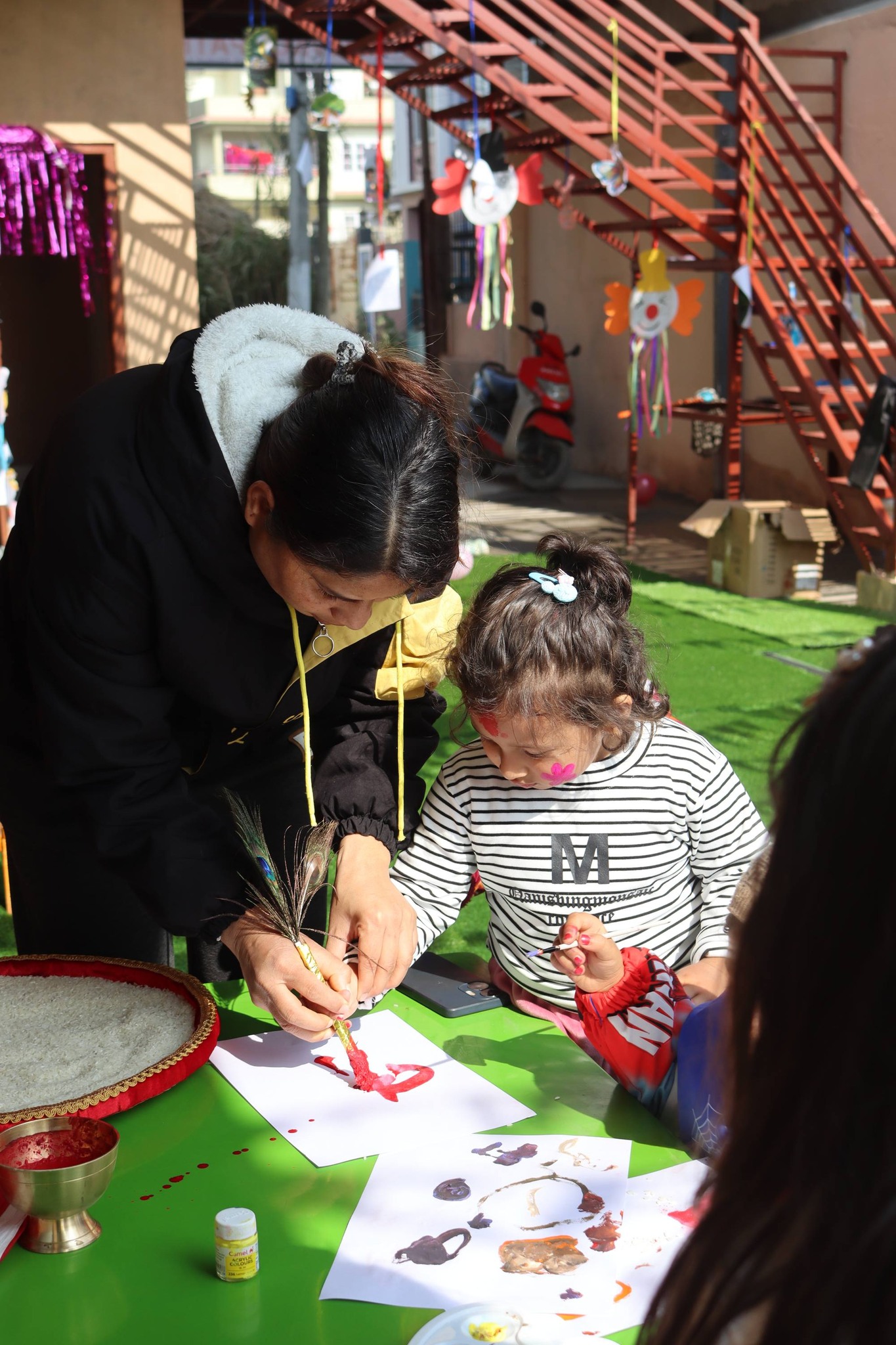
• Draw and paint
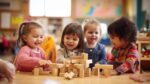
• Build with blocks
• Play ball games
These activities help build strong muscles and better coordination.
5. Creative and Artistic Skills
We notice how children:
• Draw and paint pictures
• Sing songs and dance
• Build shapes with clay or blocks
• Tell stories through drawing
This helps teachers understand how creatively children express their ideas.
How We Progress Tracking
Progress tracking means recording how your child grows in learning. We use simple and friendly ways to track learning so that children feel happy and safe. We do this without making children feel pressured.
Here are the ways we track progress:
1. Observation
Teachers watch children carefully during play and activities. This helps us see what children can do without asking them to take a test. We note down what we see so we can remember your child’s growth.
2. Activity Work Samples
Your child makes pictures, drawings, crafts, songs, role play and other activity work. We keep a sample of these works. These works show how your child has improved over time.
3. Checklists
Teachers use simple lists to check important skills like counting numbers, naming colors, speaking words, and sharing with friends. This helps us track which skills your child has learned, and which skills need more practice.
4. Stories and Notes
Teachers write short notes or stories about how your child performs in different activities. For example, how they asked a question, or shared a toy with a friend. These stories help us understand your child’s learning style.
5. Special Progress Books
We keep a special book or folder for each child. This folder has all the samples, notes and pictures that show how your child is growing. This is called a progress book.
Sharing Progress with Parents
We know that parents are partners in learning. We love to share progress with parents in simple friendly ways.
1. Parent Meetings
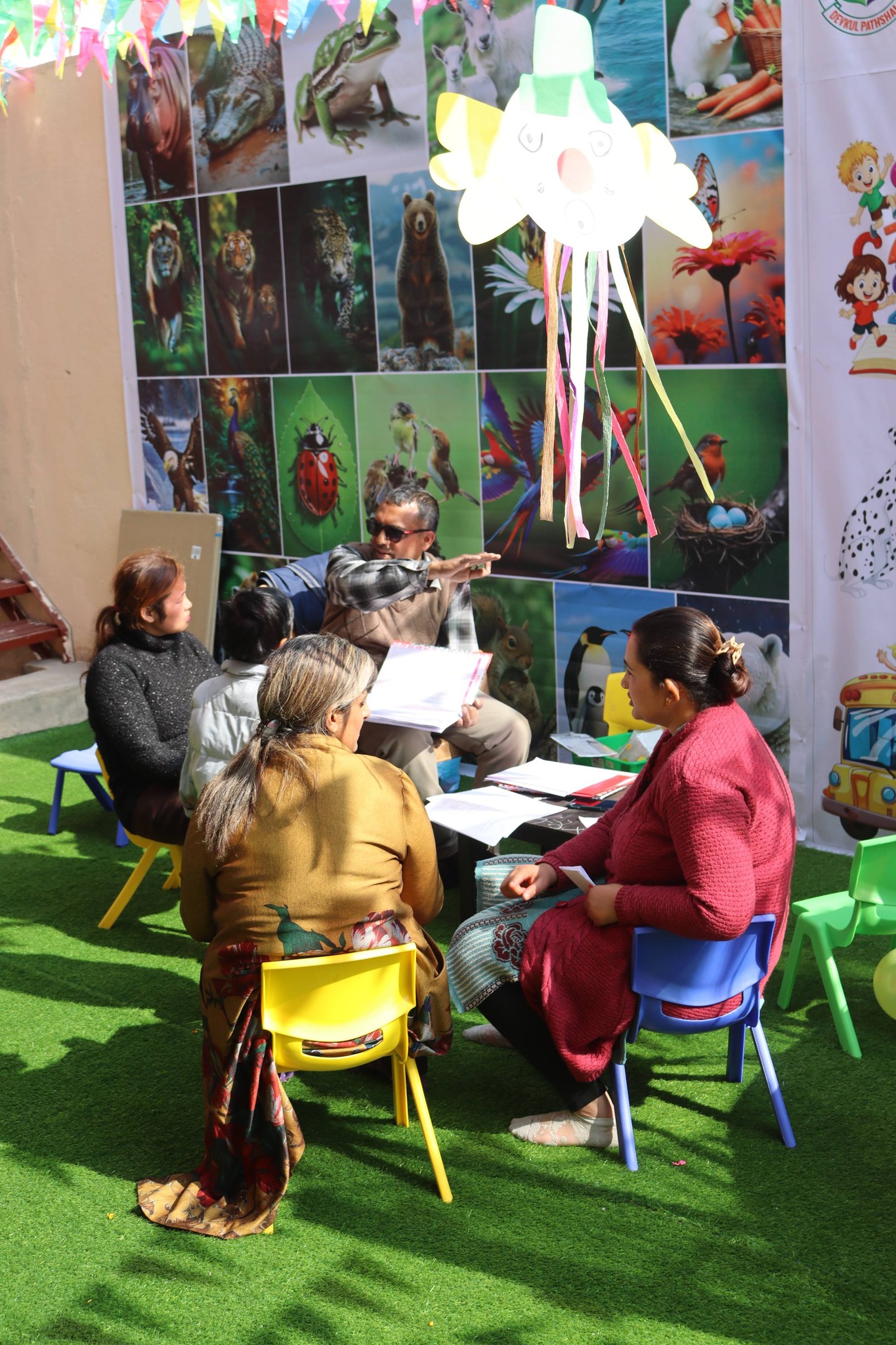
We talk with parents in simple language to share what their child has learned. We share stories, art works and what we see during activities.
2. Progress Reports
We prepare short and sweet progress reports with pictures and simple words so you can see how your child is growing.
3. Daily Chats
Sometimes we talk with parents at pick up time. These short chats help you know how your child’s day was and what new skills they learned.
4. Sharing at School Events
During school functions, we show children’s art, songs and poems. This helps parents see their child shine in creative ways.
How Regular Assessment Helps Your Child at Home and School
Regular assessment and progress tracking help children in many ways. Here are some simple examples of how your child becomes better at learning and growing:
1. Better Language Skills
Children learn new words, speak better and express their feelings clearly.
2. Strong Thinking Skills
Children solve simple problems and think in smart ways.
3. Happy Friendships
Children learn to play well, share toys and support each other.
4. Strong Bodies and Movement
Children learn to move, jump, run and do activities with confidence.
5. Excited to Learn Every Day
When children see they are growing, they feel happy and love to come to school.
Our Promise to You and Your Child
We promise to:
• Treat every child with kindness and respect
• Watch every child with care and patience
• Celebrate every success no matter how small
• Help every child feel confident and joyful in learning
• Share helpful feedback with parents
We want every child to grow not just in academics but also in confidence, kindness, creativity and joy.
Your child’s journey is a beautiful story and regular assessment is one way we watch that story grow and shine.
We are always here to help, support and celebrate your child’s learning!
Facilities
Recent Posts
-

Play-Based Learning and Child Development
Jan 23, 2026 | Devkul Pathshala
-

Creating a Safe and Inspiring Learning Environment at Devkul Pathshala
Jan 23, 2026 | Devkul Pathshala
-

How Devkul Pathshala Prepares Children for a Bright Future
Jan 23, 2026 | Devkul Pathshala
-

Top Strategies to Support Early Childhood Development
Jan 23, 2026 | Devkul Pathshala
-
Creating a Strong Start for Children with Devkul Pathshala
Jan 23, 2026 | Devkul Pathshala